Hormuz Will Stay Closed Until US Meets Iran’s Terms: Abbas Araghchi
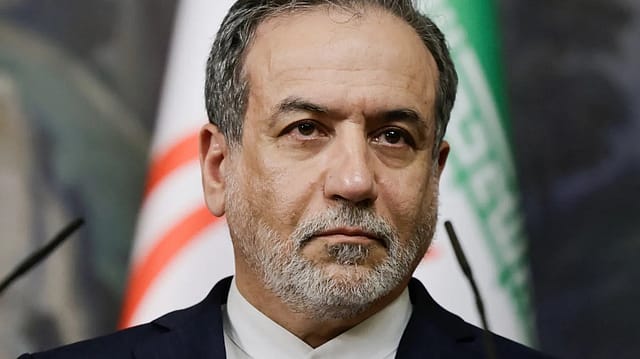
Iranian Foreign Minister Abbas Araghchi has said the Strait of Hormuz will remain closed until Washington accepts Tehran’s conditions and honours earlier commitments, while asserting that Iran’s military preparedness is deterring further US attacks.
In an interview with Iraq’s Al-Ikhbariya network, carried by Iranian state broadcaster IRIB, Araghchi said compliance with the Islamabad Memorandum of Understanding must precede negotiations on other issues.
“The American side must accept our conditions to open the strait to ships and vessels,” he said, warning that shipping would continue to face disruption until an understanding was reached.
His remarks set out Tehran’s position; the supplied reports did not independently establish the extent of the waterway’s closure or current shipping movements.

Losing Memory
16 Oct 2026 - Vol 05 | Issue 42
The making of a medical and social emergency
INDIRECT TALKS CONTINUE
Araghchi said Iran and the United States remained in indirect contact through intermediaries, including Pakistan and Qatar.
He referred to an Iranian proposal called the “Seven-Day Plan”, which he said outlined conditions and a timetable for reopening the strait.
“The Strait of Hormuz was supposed to be fully opened on the sixth day of this period,” he said.
According to Araghchi, Washington had signalled agreement but subsequently sought additional clauses concerning matters already discussed. The reports did not include a US response to that account.
“What we want from the American side is adherence to all the commitments contained in the Islamabad Memorandum of Understanding that was signed earlier,” he said. “After they adhere to these commitments, we can enter into negotiations on other cases.”
‘NUCLEAR ISSUE IS AN EXCUSE’
In the same interview, Araghchi argued that Washington’s dispute with Tehran went beyond its nuclear programme and reflected opposition to Iran’s resistance to American influence in the region.
“The nuclear issue is an excuse; what the Americans oppose and do not accept is Iranian ideology,” he said.
He accused Washington of abandoning earlier agreements despite Iranian compliance, drawing a parallel between the previous nuclear agreement and the Islamabad understanding.
Araghchi also claimed that Iran’s defence readiness was the principal deterrent against another US military confrontation.
“Americans know very well that they cannot achieve any of their goals through war,” he said.
Despite that warning, he maintained that negotiations offered the appropriate route forward.
“Iran will not surrender in any way, neither to economic sanctions nor to military threats. The only appropriate solution is diplomacy and a negotiated solution,” he said.
TRUMP DEFENDS STRIKES
The comments followed US President Donald Trump’s assertion at a Kentucky campaign rally on Saturday that the conflict with Iran would end “very quickly”.
Trump defended previous strikes on Iranian targets, claiming they had destroyed Tehran’s nuclear capabilities. He also predicted that US petrol prices would fall after military operations ended.
Those claims about the damage to Iran’s nuclear programme were not independently substantiated in the supplied reports.
Iranian Deputy Foreign Minister Saeed Khatibzadeh, meanwhile, said lasting regional peace required an end to hostilities across all fronts. He maintained that Tehran was prepared to address questions from the International Atomic Energy Agency and Washington about its nuclear programme, which Iran describes as peaceful.
SHIPPING ROUTE CLAIM
Araghchi also said Iran and Oman had agreed on shipping routes through Hormuz and were awaiting international registration of the arrangement.
He described the strait as lying in the “internal waters of Iran and Oman”. That was his characterisation of its legal status; the reports provided no independent legal assessment or documentation of the claimed agreement.
The latest exchanges centre on disputes over a 14-point memorandum signed in June, intended to end hostilities and create a path towards further negotiations, including on Iran’s nuclear programme.
With inputs from ANI